Understanding MPO/MTP Cabling for Modern Data Centers

As data centers continue to grow in scale and complexity, network infrastructure must support higher bandwidth, higher port density, and faster deployment. From cloud computing to artificial intelligence, modern applications require massive amounts of data to move quickly and reliably between servers, switches, and storage systems.
Behind this high-speed digital environment, fiber optic cabling plays a critical role. Among different fiber connectivity solutions, MPO/MTP cabling has become one of the most important technologies for modern data centers.

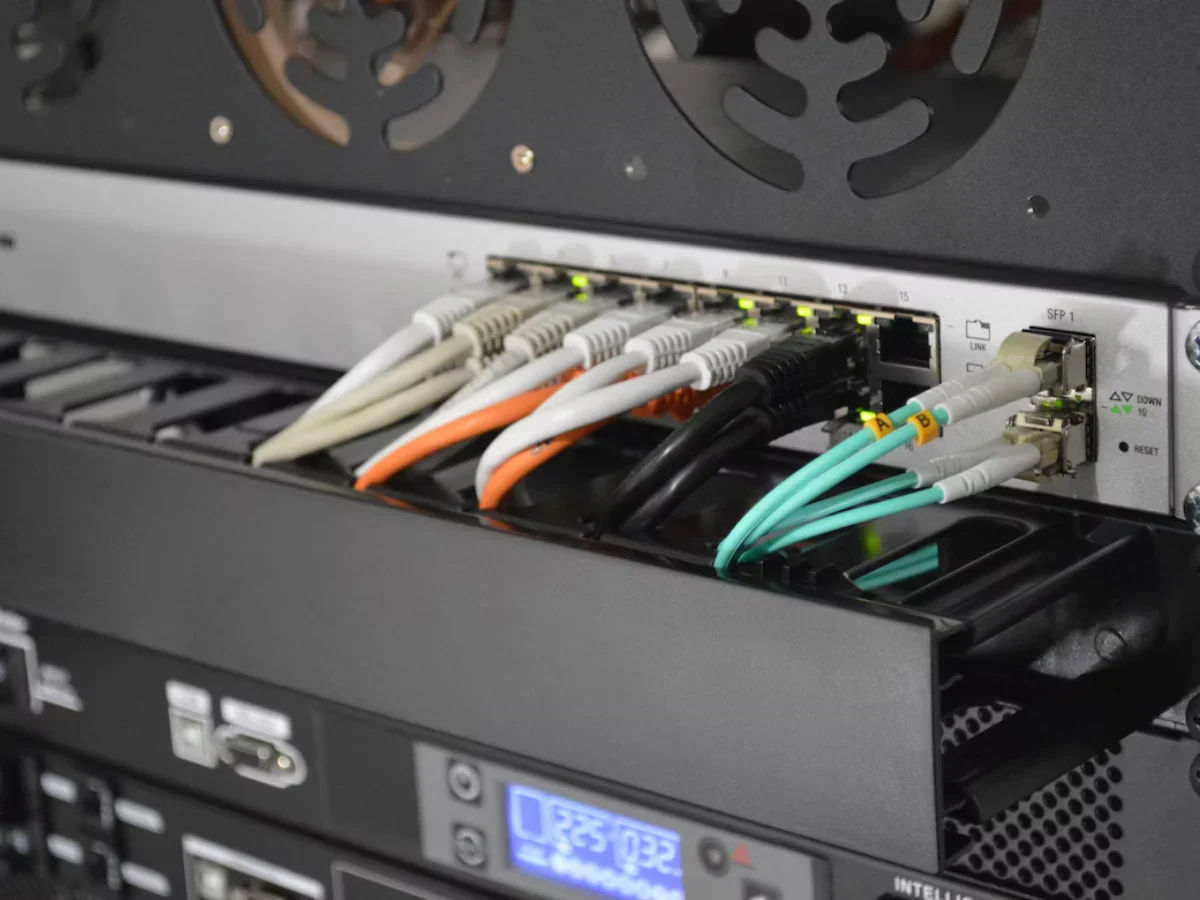
MPO jumper in data centers
What Are MPO and MTP Connectors?
MPO stands for Multi-fiber Push-On. It is a type of fiber optic connector designed to hold multiple fibers in a single connector body. Unlike traditional LC or SC connectors, which usually connect one or two fibers at a time, an MPO connector can contain 8, 12, 16, 24, or even more fibers in one compact interface.
MTP is a branded version of the MPO connector with enhanced mechanical and optical performance. In many industry discussions, MPO and MTP are often mentioned together because they are used in similar high-density fiber cabling applications.
The key advantage of MPO/MTP connectors is simple: they allow many optical fibers to be connected quickly and neatly in a much smaller space.
Why Modern Data Centers Need High-Density Cabling
Traditional data centers were often built around lower-speed connections and lower port density. However, today’s data centers are very different.
Modern facilities need to support:
Large numbers of servers
High-speed network switches
100G, 400G, and 800G optical links
Cloud computing platforms
AI training and inference clusters
Rapid expansion and flexible network upgrades
As data traffic increases, the number of fiber connections also increases. If each connection uses separate duplex fiber patch cords, cabling can quickly become difficult to manage. Cable congestion may reduce airflow, increase maintenance difficulty, and make future upgrades more complicated.
MPO/MTP cabling helps solve this problem by combining multiple fibers into one connector, enabling cleaner, denser, and more organized fiber infrastructure.
How MPO/MTP Cabling Supports High-Speed Networks
High-speed optical transceivers often require multiple fiber lanes to transmit and receive data. For example, many 100G and 400G optical modules use parallel optical transmission, where several fibers work together to carry one high-speed signal.
MPO/MTP connectors are well suited for this application because they can provide multiple fiber channels in a single connection.
In practical data center networks, MPO/MTP cabling is commonly used for:
Switch-to-switch connections
Server-to-switch aggregation links
High-density patch panels
Pre-terminated trunk cables
Data center backbone cabling
Migration from lower-speed to higher-speed networks
By using MPO/MTP cabling, data centers can build scalable fiber infrastructure that supports current network requirements while preparing for future upgrades.
MPO/MTP Trunk Cables and Patch Cords
MPO/MTP cabling systems usually include several types of products.
MPO/MTP trunk cables are used to connect different areas of a data center, such as between cabinets, rows, or distribution frames. These cables are often pre-terminated in the factory, which helps reduce installation time and improve connection quality.
MPO/MTP patch cords are shorter cables used for equipment connection or patch panel management. They are commonly used in high-density network cabinets where space is limited.
MPO-to-LC breakout cables are also widely used. These cables have an MPO/MTP connector on one end and multiple LC connectors on the other end. They are useful when connecting high-density backbone cabling to equipment that still uses LC interfaces.
Together, these cabling products create a flexible and efficient fiber network structure.
Key Factors When Selecting MPO/MTP Cabling
Choosing the right MPO/MTP cabling solution requires attention to several important factors.
Fiber Count
MPO/MTP connectors can support different fiber counts, such as 8, 12, 16, or 24 fibers. The correct fiber count depends on the optical transceiver type, network architecture, and future upgrade plan.
For example, 8-fiber and 12-fiber MPO solutions are commonly used in many high-speed data center applications, while 16-fiber solutions are becoming more relevant for some next-generation optical modules.
Single-mode or Multimode Fiber
Single-mode fiber is commonly used for longer transmission distances and higher-performance data center links. Multimode fiber is often used for shorter-distance connections inside data centers.
The choice depends on transmission distance, module type, cost considerations, and network design.
Polarity
Polarity refers to the correct matching between transmit and receive fibers. In fiber optic networks, the signal from the transmitter must reach the correct receiver. MPO/MTP cabling systems use different polarity methods, such as Type A, Type B, and Type C, to ensure correct signal routing.
Incorrect polarity can cause link failure, so polarity design must be carefully planned before installation.
Connector Gender
MPO/MTP connectors can be male or female. Male connectors have guide pins, while female connectors do not. The correct gender combination is necessary to ensure precise fiber alignment and stable optical performance.
Insertion Loss
Insertion loss refers to the amount of optical power lost when light passes through a connector or connection point. Lower insertion loss is important for high-speed and long-distance optical links.
In modern data centers, low-loss MPO/MTP cabling is especially valuable because high-speed networks have stricter optical power budgets.
Benefits of MPO/MTP Cabling
MPO/MTP cabling offers several major benefits for modern data centers.
First, it improves space efficiency. By connecting multiple fibers in one compact connector, MPO/MTP cabling greatly reduces cable volume and improves cabinet organization.
Second, it supports faster deployment. Pre-terminated MPO/MTP cables can be manufactured and tested before delivery, reducing on-site installation work.
Third, it improves scalability. Data centers can use MPO/MTP trunk cabling as a backbone and then adapt it to different equipment interfaces through patch panels or breakout cables.
Fourth, it supports high-speed migration. As networks move from 100G to 400G and 800G, MPO/MTP cabling provides a practical path for upgrading optical infrastructure.
MPO/MTP Cabling in the AI Era
The growth of AI infrastructure is making high-density optical connectivity more important than ever. AI clusters require fast communication between large numbers of GPUs, servers, and switches. This creates heavy demand for reliable, high-bandwidth fiber connections.
In this environment, MPO/MTP cabling is not only a space-saving solution. It is also a key part of building efficient, scalable, and future-ready optical networks.
As more data centers are built or upgraded to support AI and cloud applications, demand for high-quality MPO/MTP patch cords, trunk cables, and breakout solutions is expected to continue growing.
Conclusion
MPO/MTP cabling has become an essential solution for modern data centers because it supports high density, high speed, and efficient network expansion.
From cloud computing to AI infrastructure, modern digital services depend on reliable optical connectivity. By using MPO/MTP cabling, data center operators can build cleaner, more scalable, and higher-performance fiber networks.
As data traffic continues to increase, MPO/MTP cabling will remain an important foundation for the next generation of optical network infrastructure.