
AI Infrastructure Boom in Southeast Asia Creates New Opportunities for Optical Networks

Artificial Intelligence (AI) has become one of the strongest drivers of global digital infrastructure investment. As AI technologies continue to evolve, organizations are deploying larger computing clusters, expanding cloud services, and building new data centers to support increasingly demanding workloads. While much of the attention is focused on GPUs and AI chips, another critical part of this transformation is often overlooked—the optical network that connects everything together.
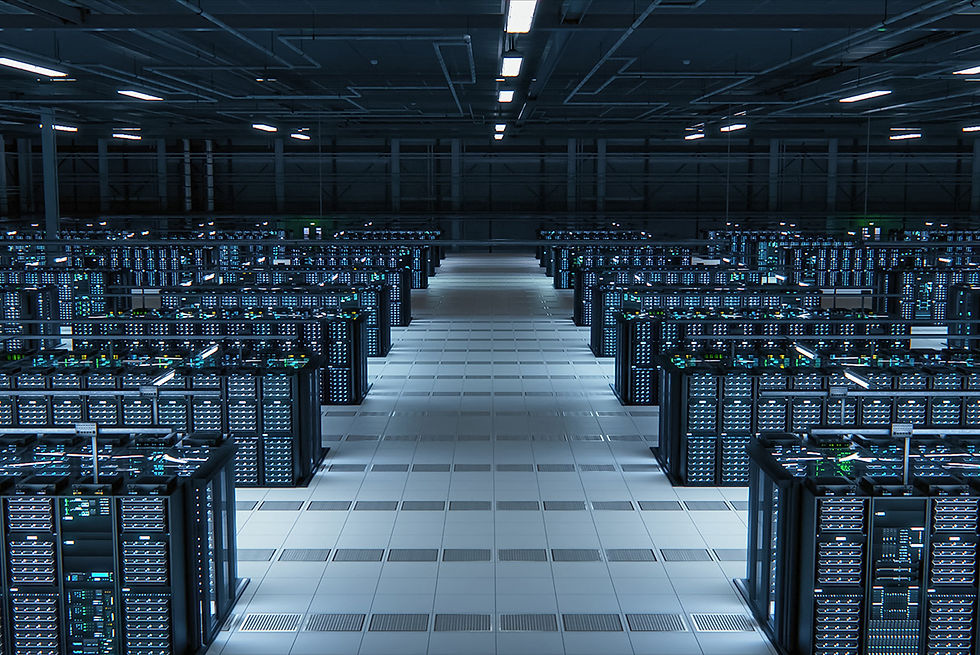
data center in Berkeley lab
Southeast Asia Emerges as a Growing Data Center Hub
In recent years, Southeast Asia has become an increasingly attractive destination for data center investment. Countries such as Singapore, Malaysia, Indonesia, Thailand, and the Philippines are seeing growing demand for digital services, cloud computing, and AI applications.
Several factors contribute to this trend:
Rapid growth of the digital economy and internet users
Increasing adoption of cloud services by enterprises
Government support for digital infrastructure development
Strategic geographic location connecting major Asian markets
Competitive operating costs compared with many developed regions
As more international cloud providers, telecom operators, and technology companies expand their presence in Southeast Asia, the region is expected to play an increasingly important role in the global digital ecosystem.
AI Requires More Than Computing Power
When discussing AI infrastructure, GPUs usually receive the most attention. However, computing performance alone cannot deliver efficient AI training or inference.
Modern AI clusters consist of thousands of servers that constantly exchange enormous amounts of data. These servers must communicate with extremely low latency and very high bandwidth. If network performance becomes a bottleneck, expensive computing resources cannot operate at their full potential.
This is why high-speed optical interconnection has become a fundamental component of AI infrastructure.
Instead of relying on traditional electrical connections for long-distance, high-bandwidth communication, modern data centers increasingly use optical transmission to move data quickly and efficiently between servers, switches, and storage systems.
Optical Networks Become More Critical
As AI workloads continue to increase, data center networks are evolving toward higher transmission speeds.
The industry has rapidly moved from 100G to 400G deployments, while 800G optical transceivers are becoming increasingly common in next-generation AI clusters. Development toward even higher-speed optical technologies is also underway to support future computing requirements.
Higher transmission speeds require not only advanced optical transceivers but also a complete high-performance optical connectivity solution. Every optical link in a data center must maintain excellent signal integrity and low insertion loss to ensure reliable network performance.
As a result, demand continues to grow for:
High-speed optical transceivers
MPO/MTP fiber optic patch cords
High-density optical cabling systems
Precision optical module components
Low-loss optical connectors
These products work together to build the optical infrastructure that supports modern AI computing.
The Importance of Reliable Optical Connectivity
As data centers become larger and more complex, reliability becomes just as important as speed.
A single AI cluster may contain thousands of optical links operating simultaneously. Even small variations in connector quality, optical alignment, or insertion loss can affect overall network efficiency.
For this reason, data center operators increasingly focus on products that offer:
Stable optical performance
Consistent manufacturing quality
High reliability for long-term operation
Compliance with international industry standards
Easy installation and maintenance
Reliable optical connectivity helps maximize network availability while reducing maintenance costs and minimizing downtime.
Opportunities for the Optical Communication Industry
The expansion of AI infrastructure is creating new opportunities across the entire optical communication supply chain.
Demand is increasing not only for complete optical transceivers but also for the components used to manufacture them, including MT ferrules, fiber arrays, optical assemblies, and other precision optical parts. At the same time, high-density fiber patch cords and structured cabling solutions continue to play a critical role in supporting large-scale data center deployments.
As AI, cloud computing, and digital transformation continue to reshape industries worldwide, optical communication technologies will remain an essential foundation of modern information infrastructure.
Looking Ahead
The rapid growth of AI is accelerating investment in data centers across Southeast Asia, creating increasing demand for faster, more reliable, and more efficient optical networks.
From optical transceivers and module components to MPO/MTP patch cords and fiber connectivity solutions, every part of the optical infrastructure contributes to building high-performance AI networks.
As digital infrastructure continues to evolve, companies that provide high-quality optical connectivity products will be well positioned to support the next generation of data centers and help enable the future of AI.